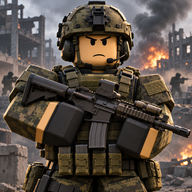
Dummy War Update History: What Players Can Confirm and How to Check
A fact-checked guide to Dummy War update history, what is currently confirmed, and how Roblox players can check for new changes.
What the Dummy War Update History Can Confirm
A new update can change how a capture-point match feels, but only reliable notes can tell you what actually changed. Right now, the available reference material does not provide verified Roblox game update notes, dates, version numbers, or a changelog for Dummy War. That means the most accurate Dummy War update history is a record of what players can confirm directly, not a list of guessed patches.
Dummy War is a Roblox first-person capture-point shooter: Dummy Rebels attack a city held by Dummy Army. Knowing that setup helps you evaluate a claimed update in context, but it does not confirm any particular map, weapon, balance change, or release date. Use the checks below to distinguish a documented change from speculation.
| Update-history detail | Confirmed in the available material? | What to do |
|---|---|---|
| Roblox platform and game identity | Yes | Keep research focused on the Roblox game |
| Attacking faction: Dummy Rebels | Yes | Use this to understand the match’s attack role |
| Defending faction: Dummy Army | Yes | Use this to understand the match’s defense role |
| Specific update dates or version numbers | No | Don’t publish dates without a primary source |
| Named maps, weapons, or balance adjustments | No | Verify in-game or through an official channel |
| A complete public changelog | No | Treat the history as unverified until notes are available |
Why Reliable Patch Notes Matter
Update history is useful when it answers practical questions: Did an objective change? Was a team’s advantage adjusted? Is a match behaving differently because of a patch, or because the teams used different tactics? Without reliable notes, players can mistake a one-off match outcome for a permanent gameplay change.
For Dummy War, the source material available for this article is especially limited. The only retrieved page was blocked by a security check and did not provide readable update details. It cannot substantiate patch claims. Community discussion may still be useful as player experience, but anecdotes should not be presented as official history.
A dependable update record should make clear where each claim came from:
| Evidence type | What it can support | What it cannot prove by itself |
|---|---|---|
| Official Roblox game description or announcement | Game identity, stated features, published news | Changes not mentioned in that post |
| In-game observation | What a player saw during a particular session | Whether it was caused by a new update |
| Repeated community reports | A possible issue or change worth checking | A confirmed patch date or developer intention |
| A single social post or screenshot | A lead for further verification | A complete changelog |
| Search snippets or inaccessible pages | That a page may exist | The content of the page |
When a claim cannot be checked, leave it out of a dated timeline. This is more useful than filling gaps with details from a different game that happens to have a similar name.
How to Check for Dummy War Updates
Start with the Roblox experience itself. Visit the game’s official Roblox page and look for creator-published descriptions or announcements. Roblox is the platform context for this game, so an official Roblox property is the appropriate place to begin: Roblox.
Then compare any announcement against what you observe in-game. A concise verification routine can prevent rumors from turning into false update history:
- Confirm the game identity. Make sure the page is for the Roblox Dummy War where Dummy Rebels attack and Dummy Army defends.
- Look for a dated statement. A clear date and direct description are stronger evidence than a repost or an undated comment.
- Separate announcement from observation. “I noticed a different match outcome” is player experience, not proof that a balance patch occurred.
- Check the same detail again. If practical, compare multiple sessions or ask other players whether they observed the same thing.
- Record uncertainty. If no official note explains the change, label it unconfirmed rather than assigning it a patch date.
| Check | Example of a careful note | Why it helps |
|---|---|---|
| Source | “Observed in a Roblox session” | Shows whether the claim is official or experiential |
| Date checked | “Checked on [date]” | Makes the note time-specific |
| Exact observation | “The team held the objective longer in this match” | Describes what happened without claiming why |
| Confirmation status | “Cause not verified” | Prevents an observation becoming a false patch claim |
| Follow-up | “Compare with an official announcement” | Gives readers a next step |
Avoid relying on a title, thumbnail, or search result alone. Those may point to unrelated games or pages that cannot be accessed. If an update claim does not name its source, date, and observable change, keep it out of a factual timeline.
What Players Can Track Between Updates
Even before a formal changelog is available, players can keep useful match notes. The goal is not to manufacture patch data; it is to give future comparisons a consistent baseline. Record what happened, not what you assume the developers changed.
For example, note which faction you played, whether your team was attacking or defending, and what happened around the capture point. Avoid recording invented weapon names or numerical damage values when those details have not been confirmed. Consistent descriptions are more valuable than false precision.
| Match detail to record | Practical way to describe it |
|---|---|
| Faction | Dummy Rebels or Dummy Army |
| Match role | Attacking or defending |
| Objective progress | Whether your team gained, held, or lost control |
| Team coordination | Whether players moved together or split up |
| Session context | Approximate time and whether you played more than one round |
| Confidence | Your observation, repeated player experience, or official confirmation |
This kind of log can help separate strategy from a possible game change. If a team starts coordinating better, it may capture an objective more often without any update having occurred. Likewise, one difficult defense does not establish that the defending faction was weakened.
| What changed in your experience? | First question to ask | Safe conclusion |
|---|---|---|
| Your team captured more often | Did your team coordinate or use a different approach? | Match outcome changed; cause unknown |
| A route felt harder to defend | Did the opposing team attack together? | Record the observation and compare later |
| A match seemed different from last time | Can you identify a specific, repeatable change? | Don’t call it an update without confirmation |
| Other players mention a change | Is there an official note or repeatable observation? | Label it community reports until verified |
Playing Effectively While the History Is Unclear
You do not need confirmed patch notes to make sound decisions in a capture-point shooter. The stable principles are straightforward: attackers benefit from coordinated pressure, defenders benefit from maintaining coverage, and both teams need to pay attention to the objective rather than chasing every fight.
As Dummy Rebels, avoid scattering if your team is trying to take a defended point. Move with teammates when possible and look for opportunities to pressure the objective together. As Dummy Army, keep enough players attentive to the point that an opponent cannot take it while everyone is pursuing separate fights. These are general team-shooter principles, not claims about a recent Dummy War update.
| If you are playing… | Useful general approach | What to avoid |
|---|---|---|
| Dummy Rebels | Coordinate pressure on the capture point | Treating every fight as more important than the objective |
| Dummy Army | Maintain awareness of the defended point | Leaving the objective unattended for too long |
| Either faction | Communicate what you observe and adapt as a team | Assuming one match proves a balance change |
| A returning player | Check the Roblox game page and observe a full match | Relying on old or unverified claims |
When an update is eventually documented, compare its stated changes with your own observations. A note about an objective or match rule would be more meaningful when tracked across several rounds than when judged from one encounter. Until then, describe tactics as tactics and player experience as player experience. That distinction keeps the Dummy War update history useful to the next player looking for reliable information.
FAQ
Is there a confirmed Dummy War update history?
The available reference material does not contain verified Roblox update notes, dates, or version numbers. No specific patch history can be confirmed from it.
Where should I look for Dummy War updates?
Start with the Roblox experience page and any creator-published announcements available through official channels. Check that each source refers to the Roblox game with Dummy Rebels and Dummy Army.
Are community reports proof of a new update?
No. Community reports can identify changes worth investigating, but they are player experience unless supported by an official announcement or other reliable confirmation.
Should I trust update dates or weapon changes posted without a source?
Treat them as unverified. The current material does not confirm specific update dates, weapon names, maps, or balance adjustments, so those details should not be repeated as fact.
Related Guides
Dummy War New Update: What's Confirmed, What's Rumor, and How to Prep
Tracking the Dummy War new update: how to verify patch notes, separate rumor from fact, and prep your attack or defense on Roblox.
The Ultimate Dummy War Update Log Guide: Tracking Roblox FPS Changes
Learn how to track Dummy War update logs on Roblox, understand patch notes for better strategy, and stay ahead of meta shifts in this capture-point shooter.