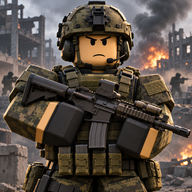
Dummy War Weapon Stats Explained: How to Read, Test, and Compare Guns
A practical guide to Dummy War weapon stats: what the numbers mean, how to field-test guns on attack and defense, and how to compare loadouts fairly.
Why Dummy War Weapon Stats Are Harder to Pin Down Than They Look
If you have ever searched for a clean, trustworthy table of Dummy War weapon stats, you already know the problem. Dummy War is a Roblox first-person capture-point shooter, and like most games built inside the Roblox ecosystem, it does not ship with an official, publisher-maintained stat sheet that stays accurate forever. The Dummy Rebels attack, the Dummy Army defends, and the balance shifts as the developer tunes things behind the scenes.
That does not mean the numbers are unknowable. It means you have to read them the way experienced players do: partly from whatever the game surfaces in its own UI, and partly from disciplined in-match testing. This guide walks through both, so you can stop guessing whether a gun feels wrong because of the weapon or because of how you are using it.
One honest disclaimer up front: this article will not hand you a fake table of damage values. Inventing numbers would be worse than useless — it would send you into a match with the wrong expectations. What you get instead is a framework for reading, measuring, and comparing Dummy War weapon stats yourself, on the same maps and against the same kinds of opponents you actually face.
What Counts as a "Weapon Stat" in a Capture-Point Shooter
Most players think of weapon stats as damage and fire rate. In a capture-point game, that is maybe half the picture. The rest lives in how a weapon behaves while you are moving, holding an angle, or pushing onto a contested point with teammates scattered around you.
Here is the working vocabulary worth keeping straight before you compare anything.
| Stat Category | What It Describes | Why It Matters in Dummy War |
|---|---|---|
| Damage per shot | Raw hit strength before falloff | Determines how many hits land a kill at close range |
| Time to kill (TTK) | Total time from first hit to elimination | The single most useful comparison number across weapons |
| Rate of fire | Shots per second/minute | Converts damage per shot into real threat level |
| Magazine size | Rounds before reloading | Decides whether you can clear a point or must retreat |
| Reload speed | Downtime between magazines | Punishes you hardest during a capture push |
| Recoil and spread | Accuracy loss while firing | Separates a weapon that works at range from one that does not |
| Range falloff | Damage decay over distance | Matters enormously on open sightlines |
| Handling/mobility | Movement and ready speed | Often the hidden reason a gun feels "bad" |
Two of these — TTK and range falloff — are the ones most often ignored and most often decisive. A gun with excellent damage per shot but heavy falloff is a close-quarters tool pretending to be a rifle.
Attacker vs Defender: Different Sides, Different Priorities
Because Dummy War splits the lobby into an attacking faction and a defending faction, the same weapon can feel strong on one side and mediocre on the other. Attackers typically need to close distance and clear a point; defenders typically need to hold a line and win the first exchange.
That changes which Dummy War weapon stats you should care about most.
| Priority | Dummy Rebels (Attacking) | Dummy Army (Defending) |
|---|---|---|
| Most important | TTK at close-to-mid range | First-shot accuracy and holding power |
| Second | Reload speed (you will run dry mid-push) | Range falloff (you shoot at distance more often) |
| Third | Handling while moving | Magazine size (fewer safe reload windows) |
| Least important | Extreme long-range falloff | Sprint-out speed |
| Common trap | Bringing a long-range build onto a tight point | Bringing a spray weapon to an open sightline |
Community reports from capture-point shooters consistently echo this: players blame the gun when the real mismatch is role. Before you conclude a weapon is weak, play one full round on the opposite side with it. If it suddenly performs, the issue was positioning, not the stat line.
Field-Testing Your Own Dummy War Weapon Stats
The most reliable data you will ever get comes from your own repeatable tests. The trick is making them repeatable — same distance, same target type, same conditions. Random matches produce random conclusions.
| Step | What to Do | What You Learn |
|---|---|---|
| 1 | Pick a single weapon and change nothing else | Establishes a baseline |
| 2 | Test at three fixed distances (close, mid, long sightline) | Reveals falloff behavior |
| 3 | Count hits to eliminate, not seconds | Gives a usable damage proxy |
| 4 | Time a full magazine dump plus reload | Measures sustained output |
| 5 | Repeat while strafing and while standing still | Exposes handling and spread costs |
| 6 | Play one round on each faction | Confirms role fit |
| 7 | Record results in a simple note | Builds a personal stat sheet over time |
Three or four sessions of this and you will know more about a weapon's real behavior than any generic tier list can tell you. Note that step 7 matters more than it sounds — memory is a terrible database, and "it felt slower" is not a measurement.
If you want a broader benchmark for how Roblox experiences are published and updated, the official Roblox platform site is the authoritative place to check a game's page, description, and update notes. That is also where you should look before trusting any third-party claim about a balance change.
Reading Dummy War Weapon Stats Without Getting Fooled
A handful of mistakes reliably produce bad conclusions about Dummy War weapon stats. Avoiding them costs nothing.
- Confusing "feels bad" with "is weak." Recoil you have not learned yet reads as inaccuracy. Give a weapon two full rounds before judging.
- Comparing across different ranges. A close-range monster will always lose a long sightline duel. That is design, not imbalance.
- Ignoring the reload tax. A weapon with a huge magazine but a slow reload can still leave you exposed on a capture push.
- Trusting a single highlight clip. One good round is an anecdote. Ten rounds is data.
- Forgetting ammo economy. Total reserve ammo quietly decides whether you can hold a point for a full capture timer.
- Assuming the numbers never change. Roblox games get tuned. A stat conclusion from months ago should be re-verified, not repeated.
There is also a social trap worth naming: strongly held opinions spread faster than tested ones. When someone in a lobby tells you a weapon is broken, ask what range, what faction, and how many rounds they played. The answer usually explains everything.
Turning Stat Knowledge Into Round Wins
Numbers are only useful if they change what you do at the start of a round. Here is how to convert your Dummy War weapon stats notes into decisions.
| Situation | Stat-Driven Choice |
|---|---|
| Attacking a tight, enclosed point | Prioritize TTK and reload speed; accept poor falloff |
| Attacking an open approach | Prioritize accuracy and mid-range falloff |
| Defending a long sightline | Prioritize first-shot accuracy and low spread |
| Defending a cramped interior | Prioritize magazine size and close-range TTK |
| Low on team presence on the point | Prioritize handling and mobility to reposition fast |
| Holding a captured point under pressure | Prioritize sustained output and ammo reserve |
The pattern is simple: pick the weapon whose weaknesses your position hides and whose strengths your position exposes. That is the entire skill of reading Dummy War weapon stats well, and it beats memorizing any tier list.
Frequently Asked Questions
Are there official Dummy War weapon stats published anywhere? Not in a single authoritative table that this guide can verify. Any specific damage or fire-rate figures you see circulating should be treated as player experience rather than confirmed data. Test in-game and trust your own repeatable results.
How do I compare two weapons fairly in Dummy War? Match the conditions: same distances, same faction, same number of rounds, and count hits-to-eliminate rather than relying on feel. Then factor in reload downtime, because sustained output often decides capture fights more than burst damage does.
Do Dummy War weapon stats change over time? Roblox games get updated, and balance tuning is normal. Re-verify anything you concluded more than a few weeks ago, and check the game's page on the Roblox platform for developer notes before assuming old numbers still apply.
Does my faction change which stats matter most? Yes. Attackers generally benefit from fast TTK and quick reloads for closing distance, while defenders get more value from accuracy, range retention, and magazine size for holding angles. The same gun can legitimately feel stronger on one side.
Where should I write all this down? A simple note file with columns for weapon, distance, hits-to-kill, reload time, and faction. Ten minutes of record-keeping will out-perform hours of scrolling through conflicting opinions about Dummy War weapon stats.
Related Guides
Dummy War Best Weapons: A Practical Guide to Picking the Right Loadout
No verified tier list exists for Dummy War best weapons — here's how to test archetypes, match loadouts to attack or defense, and build one that fits.
Dummy War Weapon Guide: Master Your Arsenal for Victory
Master the Dummy War weapon guide to dominate the battlefield. Learn attack & defense loadouts, team strategies, and essential Roblox combat tips.
Dummy War Weapon List: A Roblox Attacker & Defender Arsenal Guide
Master the Dummy War weapon list for the Dummy Rebels and Dummy Army. Learn team roles, loadout strategies, and how to dominate capture points.